“Natural” does not mean
safe before surgery.
Fish oil, turmeric, ginkgo and vitamin E all affect bleeding. If you’re flying to Korea for a procedure, these need to come out of your routine before you go — not after you land.
Most people planning surgery in Korea prepare carefully. They research clinics, book flights, arrange accommodation near the hospital.
Then they keep taking their daily omega-3 right up until the morning of the procedure.
Supplements before surgery in Korea come up constantly at our counter, and the topic is worth understanding properly — not as a list to memorise, but as a set of mechanisms. That way you can reason about anything the list leaves out.

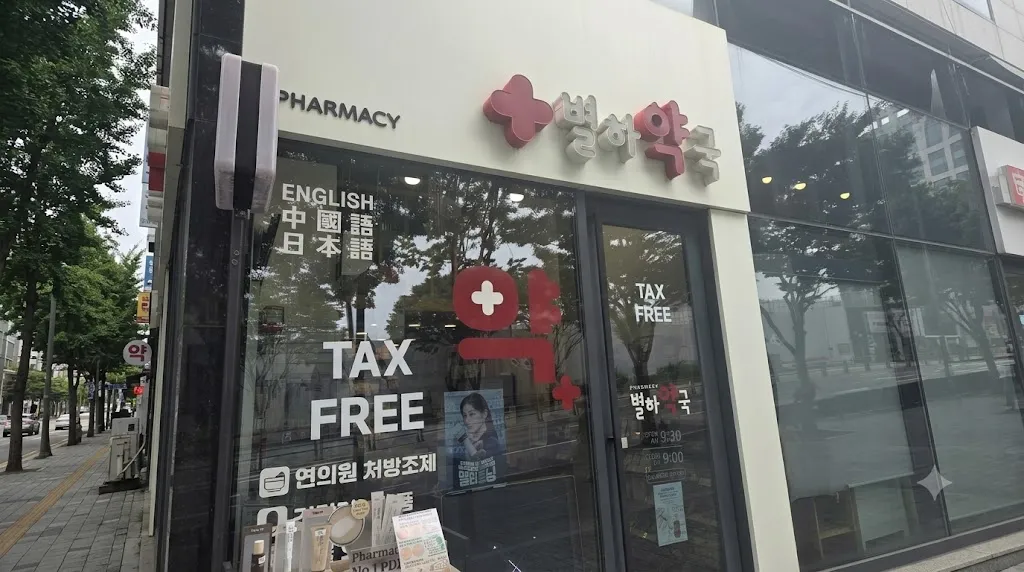
Byeolha Pharmacy (별하약국) — Gangnam, Seoul. One minute from Sinnonhyeon Station Exit 3, surrounded by the district’s clinics.
Sat 9:00–18:00
WeChat · Tax refund
Why supplements before surgery matter at all
Surgery relies on your blood being able to clot on schedule. Anything that interferes with that shows up as more bleeding during the procedure, and more bruising and swelling afterwards.
Supplements interfere through three different routes. Understanding which is which is more useful than memorising a list.
Route one — platelets stop working properly
Platelets are the cells that clump together to plug a wound. Fish oil and omega-3s, vitamin E, garlic and ginger all make them less sticky.
This is the most common route, and it’s also the slowest to reverse. Platelets don’t recover instantly once you stop — your body has to produce new ones, which takes days.
Route two — the clotting cascade slows down
Beyond platelets, clotting depends on a chain reaction of proteins. Ginkgo biloba, turmeric and ginseng interfere here.
Turmeric deserves a specific mention because it’s marketed relentlessly as an anti-inflammatory, which sounds like exactly what you’d want around surgery. It also extends bleeding time, and some surgeons ask patients to stop it a full month ahead.
Route three — anaesthesia is affected
This route has nothing to do with bleeding. St. John’s Wort changes how the liver processes other drugs, which can alter how anaesthetic medications behave. Echinacea affects liver enzymes involved in anaesthesia. Kava and valerian act on the central nervous system.
Some clinic blogs advise loading up on turmeric, ginger and omega-3 in the weeks before surgery, framed as anti-inflammatory preparation.
This contradicts standard pre-operative guidance. Those three appear on nearly every “stop before surgery” list precisely because they affect bleeding. If you’ve read something like that, check it against your own surgeon’s written instructions.
Supplements before surgery in Korea: when to stop
The list matters less than the calendar. Stopping fish oil the night before your flight achieves very little.
General guidance from surgical practices runs roughly like this, though your surgeon’s specific instruction always overrides it:
- Two weeks before — most vitamins, fish oil, and multivitamins
- Two to four weeks before — herbal supplements including ginkgo, garlic, ginseng and echinacea
- Up to 30 days before — turmeric, kava, St. John’s Wort, per some surgical practices
Because you’re travelling, planning supplements before surgery in Korea has a practical consequence most local patients never face: the decision point comes before you leave home, not after you arrive in Seoul. If your surgery is ten days after landing and the guidance is two weeks, the window has already closed.
Build this into your planning at the same time you book your flight.
What you should not stop
This is where people sometimes overcorrect, and it’s the more dangerous error.
Blood pressure medication, heart medication, thyroid medication, anti-seizure medication, asthma inhalers, antidepressants, statins and diabetes medication are generally continued through surgery, sometimes with timing adjustments on the day.
Stopping them abruptly because you read a list online can cause far more harm than the supplement you were worried about. These decisions belong to your surgeon and your regular doctor, working together.
If you take anticoagulants — warfarin, apixaban, clopidogrel and similar — that is a specific conversation with your prescribing doctor well before you travel. Do not simply stop them.
The gap that catches travellers
Here’s the situation we see repeatedly at the counter.
Someone books a procedure through a coordinator. Consultation happens partly over messaging apps. Pre-op instructions arrive as a short summary, sometimes translated loosely, sometimes covering only smoking and alcohol.
Nobody asks what’s in their supplement drawer.
is three items off the stop list, taken daily.
If you’re not sure whether your clinic’s instructions covered this, ask them directly and in writing before you fly. A short message to your coordinator listing every supplement you take, by name, is worth the two minutes.
What to do if you’re already in Seoul
If you’ve landed and realise you’ve been taking something on the list, don’t panic and don’t self-manage.
-
Tell your clinic immediately
Give them the product name, the dose, and how long you’ve been taking it. They may adjust the schedule, and that’s a normal, manageable outcome. Hiding it is the only bad option.
-
Bring the actual packaging
Supplement labels vary enormously between countries. The product name alone often isn’t enough to identify what’s in it. Photos of the ingredient panel work if you’ve thrown out the box.
-
Don’t start anything new
This includes Korean products bought here. Painkillers in particular — many over-the-counter options contain ingredients that affect bleeding. Ask a pharmacist before buying anything in the pre-op window.
Frequently asked questions
Q Is a regular multivitamin a problem?
It can be, because most multivitamins contain vitamin E, and some include herbal extracts. Many surgical practices ask patients to stop multivitamins in the week or two before surgery for exactly that reason. Check the label rather than assuming.
Q Can I take painkillers before surgery?
Aspirin and NSAIDs like ibuprofen affect platelets and are typically stopped in advance. Acetaminophen (paracetamol) is generally the safer option for minor aches in the pre-op period, assuming no liver problems, but confirm with your surgical team first.
Q What about supplements after surgery in Korea?
Many practices ask patients to hold the same items for a period after surgery as well, since bleeding risk doesn’t end when the procedure does. Your clinic will tell you when it’s safe to resume. Don’t restart on day two because you feel fine.
Q Can I buy supplements in Korea for recovery?
You can, but timing matters more than the product. Bring your clinic’s instructions to a pharmacy and ask before buying. Some things that seem helpful for healing are on the same restricted list.
Q My clinic didn’t mention supplements at all. Should I worry?
Ask them. Instructions given through a coordinator or a translated summary sometimes leave this out. It’s a reasonable question and any clinic will answer it. Send a written list of everything you take, by product name.
Still unsure about supplements before surgery in Korea?
Bring your supplement bottles and your clinic’s instructions. We’ll go through them with you and tell you plainly what matters and what doesn’t.
We’re not going to sell you anything for it. Usually the answer is to stop something, not to start something.
Byeolha Pharmacy
Sinnonhyeon Station (Line 9 / Shinbundang Line), Exit 3 · English, Japanese and Chinese spoken
Weekdays 9:30 AM – 9:00 PM · Saturday 9:00 AM – 6:00 PM
SHOW THIS AT THE COUNTER OR TO A TAXI DRIVER
서울 강남구 신논현역 별하약국
Byeolha Pharmacy, Sinnonhyeon Station, Gangnam-gu, Seoul
- American Society for Aesthetic Plastic Surgery guidance on pre-operative supplement disclosure
- Korea Ministry of Food and Drug Safety, health functional food information
- Published pre-operative guidance from multiple surgical practices, 2024–2026
This article is general information and is not medical advice. It does not replace the pre-operative instructions given by the clinic performing your procedure. Never start or stop a prescribed medication without speaking to the doctor who prescribed it.