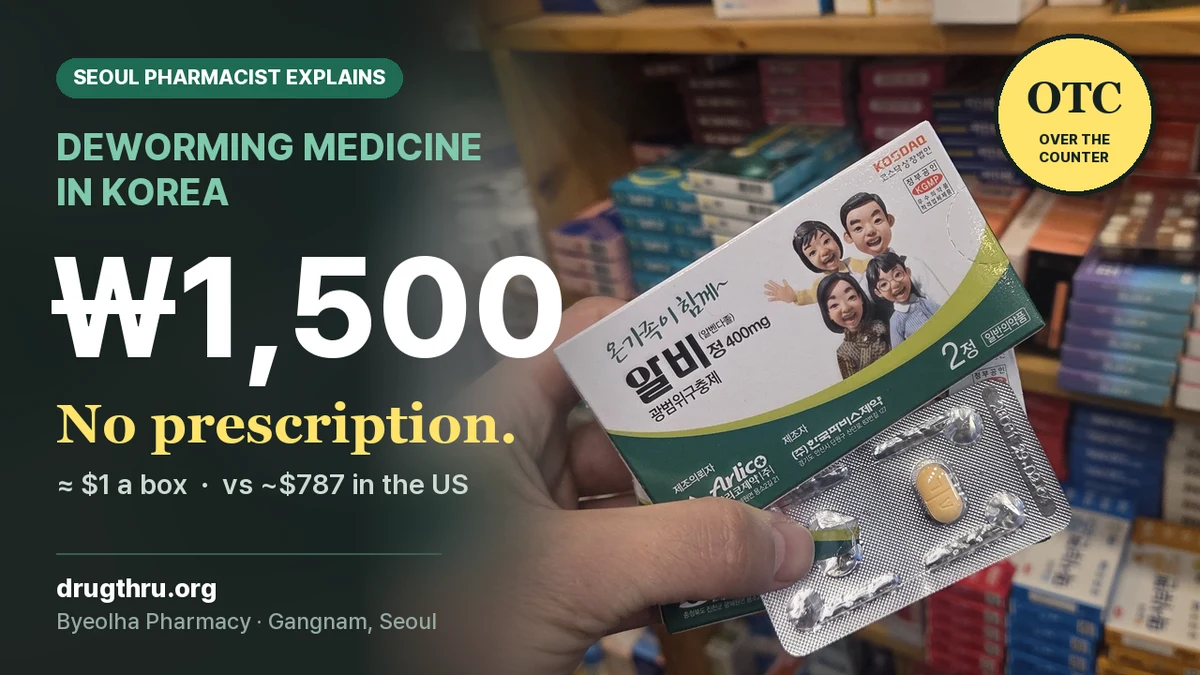
Yes — deworming medicine in Korea is sold over the counter.
One albendazole 400 mg tablet, no prescription — ₩1,500 for a two-tablet box, about a dollar. In the US the same drug needs a prescription and has an average retail price of about $787. Before you buy a box, though, it’s worth knowing whether you actually need one.
Every spring and autumn, Korean pharmacies hear the same request.
“Dewormer, please. One for everyone in the family.”
More and more of the people buying deworming medicine in Korea are visitors.
Some heard that Koreans take it twice a year. Some have been watching medical dramas. Some just noticed that a drug that costs a fortune back home is sitting on the shelf here for the price of a coffee.
Here are the deworming pills for humans you’ll find on that shelf, how to take them, and the honest answer to whether you should.

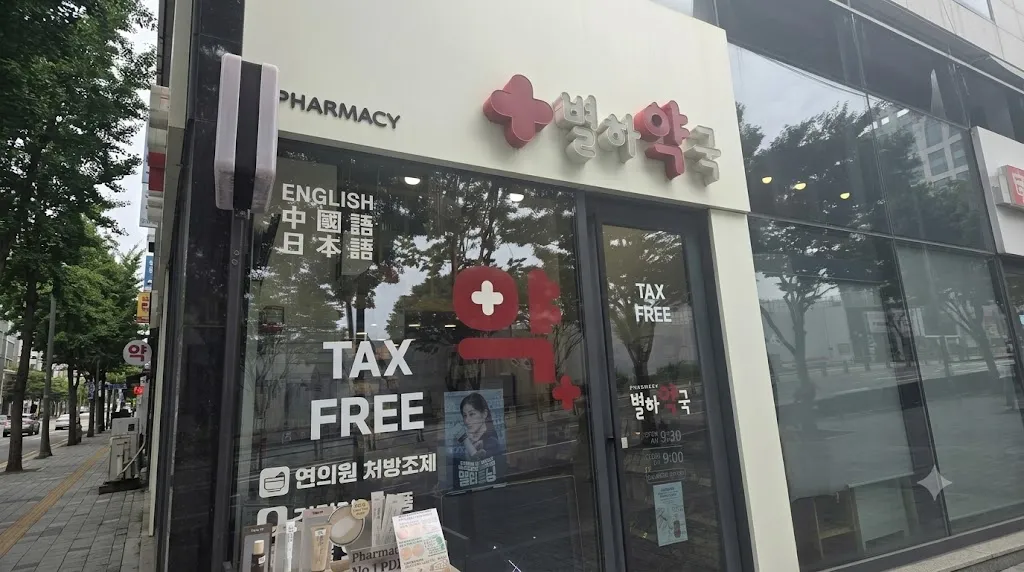
Byeolha Pharmacy (별하약국) — Gangnam, Seoul. One minute from Sinnonhyeon Station Exit 3, surrounded by the district’s clinics.
Sat 9:00–18:00
WeChat · Tax refund
Deworming medicine in Korea: no prescription needed
Deworming medicine in Korea is classified as a general (over-the-counter) medicine. You walk into any pharmacy, ask, and pay. No doctor, no paperwork.
You’ll usually be offered one of these:
-
Albi (알비정) — albendazole 400 mg
A two-tablet box. One tablet is one adult dose. This is the box most Korean families buy.
-
Zentel (젠텔정) — albendazole 400 mg
Same ingredient and strength, different manufacturer (Yuhan). Interchangeable with Albi.
-
Zelcom (젤콤) — flubendazole 500 mg
A different ingredient from the same family, also taken as a single dose. Comes as a tablet and as a liquid suspension that some parents prefer for children.

At our pharmacy a two-tablet box of Albi is ₩1,500 — roughly one US dollar. Prices vary slightly between pharmacies, but not by much.
Why the same deworming medicine costs so much more in the US
In the United States, albendazole is prescription-only. GoodRx lists an average retail price of about $787 for four 200 mg tablets — that’s two adult doses. With a discount coupon it can drop to around $24–33, but without insurance you still need a doctor’s prescription and an appointment first.
Korea went the other way for historical reasons. In 1971, a national survey found intestinal parasites in 84.3% of the population. Decades of school stool tests and mass deworming followed, which is why deworming medicine in Korea ended up as an everyday household item rather than a prescription drug.
It worked. By 2012 the infection rate had fallen to 2.6%.
The worms mostly didn’t.
How to take deworming medicine bought in Korea
-
Adults and children aged 2 and over: one 400 mg worm tablet
A single dose covers the common intestinal worms — roundworm, hookworm, whipworm and pinworm. Swallow it with water. If swallowing is hard, the Korean label allows chewing it, though I’ll warn you from personal experience: it tastes terrible.
-
Pinworm (threadworm in the UK): a second dose about two weeks later
The first tablet kills the worms but not all the eggs. A second tablet roughly two weeks later catches the ones that hatch afterwards.
-
Treat the whole household at the same time
Pinworm spreads through hands, bedding and shared toys. Wash underwear and sheets in hot water and keep nails short.
- You are pregnant or could be pregnant. Albendazole should not be taken during pregnancy.
- You have liver disease.
- The patient is under two years old. Tell the pharmacist the child’s exact age.
Should you deworm yourself every year?
Koreans traditionally take a dewormer every spring and autumn. I make my living selling medicine, so take this as an honest admission: most adults asking for deworming medicine in Korea don’t need it.
Dewormers are not preventive. They work by starving worms that are already in your gut. Albendazole is largely cleared from the body within a day or two, so a tablet you take today does nothing about a parasite you pick up next week.
I explain it to customers like this: a dewormer isn’t an umbrella you open before the rain. It’s a towel you use after you get wet.
It’s worth taking when there’s a reason:
-
A child scratching their bottom at night
The classic sign of pinworm, common in kindergartens and daycare. Treat the whole family.
-
You’ve spent time somewhere parasites are common
Rural travel, poor sanitation, untreated water.
-
Visible worms in your stool, or ongoing stomach trouble
Here a doctor visit and stool test is better than guessing.
The most common parasite in Korea today isn’t roundworm. It’s the liver fluke (Clonorchis), caught from raw freshwater fish — 1.86% of the population in the 2012 national survey.
It lives in the bile ducts, not the gut, and over-the-counter albendazole barely touches it. Treatment is praziquantel, which needs a prescription. The WHO’s cancer agency classifies the liver fluke as a definite cause of bile duct cancer, so see a clinic for a stool test rather than self-treating.
One more thing you may see online: dog dewormer (fenbendazole) sold as a cancer cure. In 2019 it sold out across Korean veterinary pharmacies, and Korea’s drug regulator and the Korean Cancer Association both warned patients not to take it. It has never been tested in humans for cancer. If you or someone you love is in treatment, talk to the oncology team first.
Frequently asked questions
Q Do I need a prescription for deworming medicine in Korea?
No. Albendazole 400 mg (Albi, Zentel) and flubendazole (Zelcom) are over-the-counter medicines in Korea. Ask at any pharmacy — a box of two albendazole tablets is around ₩1,500.
Q Do adults need deworming regularly?
Not without a reason. Deworming medicine treats existing infections; it doesn’t prevent new ones. If you have no symptoms and don’t regularly eat raw food, routine twice-yearly dosing like the Korean habit isn’t necessary.
Q Can children take deworming medicine in Korea?
Children aged two and over take the same single 400 mg dose under the Korean label. For younger children, ask the pharmacist and give the exact age.
Q Can I take it home with me?
Rules on bringing medicine across borders depend on your country. Keep it in the original box with the receipt, carry a small personal quantity, and check your home country’s customs guidance before you fly.
Q Will albendazole treat liver fluke from raw fish?
Not reliably. Liver fluke is treated with praziquantel, a prescription medicine. See a clinic for a stool test.
Not sure whether you need deworming medicine?
Come in and ask — in English. Tell us what you’ve eaten and where you’ve been, and we’ll tell you honestly.
If the answer is that you don’t need anything, that’s the answer you’ll get.
Byeolha Pharmacy
Sinnonhyeon Station (Line 9 / Shinbundang Line), Exit 3 · English, Japanese and Chinese spoken
Weekdays 9:30 AM – 9:00 PM · Saturday 9:00 AM – 6:00 PM
SHOW THIS AT THE COUNTER OR TO A TAXI DRIVER
서울 강남구 신논현역 별하약국
Byeolha Pharmacy, Sinnonhyeon Station, Gangnam-gu, Seoul
- Korea Ministry of Health and Welfare / KDCA, 8th National Survey of Intestinal Parasitic Infections (2012)
- KDCA Public Health Weekly Report, intestinal parasite control programme (2019)
- GoodRx, Albendazole prices (accessed October 2026)
- Korea Ministry of Food and Drug Safety & Korean Cancer Association, notice on veterinary fenbendazole (October 2019)
- IARC Monographs Vol. 100B, Clonorchis sinensis (2012)
- Product labels: Albi Tab., Zentel Tab. 400 mg (albendazole); Zelcom Tab. (flubendazole 500 mg)
This article is general information and is not medical advice. If you have symptoms, are pregnant, have liver disease, or are treating a young child, speak to a pharmacist or doctor before taking any dewormer.