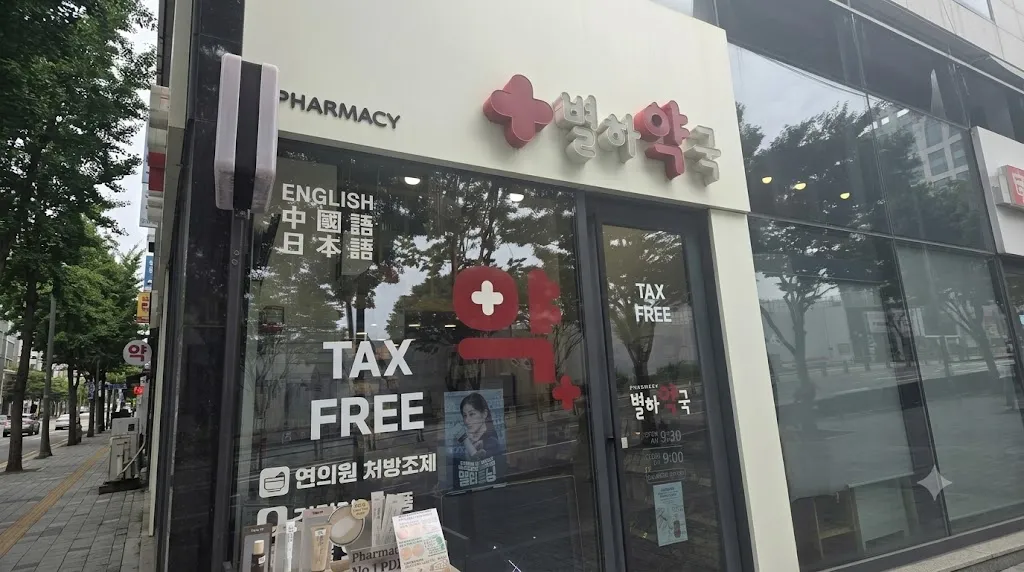
Bruising after filler is one of the most common reasons visitors walk into my pharmacy in Gangnam, often the day after a clinic visit. Most bruises are harmless and fade on their own. The question is what actually helps — and what you can buy in Korea.
Korean pharmacies sell heparinoid bruise gels over the counter, and Korea also has something most visitors have never heard of: an oral herbal medicine for bruising. Below is what to ask for, where not to put a gel, which painkillers to skip, and the signs that mean it isn’t a bruise at all.

1. Bruising after filler: how long does it last?
A filler needle passes through skin that is full of tiny blood vessels. When one of them leaks a little, you get a bruise. According to the American Academy of Dermatology, redness, swelling, tenderness and occasional bruising after filler tend to clear within 7 to 14 days, often sooner.
- Day 1–2: the bruise may look red or purple and feel tender
- Following days: it usually turns bluish, then green or yellow as it fades
- Thin-skinned areas such as under the eyes and around the lips tend to show bruises more
2. Bruise or emergency? Check this first
Before buying anything, make sure it really is a bruise. Rarely, filler can be injected into a blood vessel and block blood flow. The US FDA advises seeking immediate medical attention for these signs during or shortly after the procedure:
- Skin near the injection turns white, grey or blue
- Unusual or increasing pain — more than you’d expect from a bruise
- Any vision change, blurred vision or eye pain
- Signs of a stroke: trouble speaking, face drooping, weakness or numbness, severe headache, dizziness or confusion

A normal bruise is purple or blue, doesn’t get more painful day by day, and slowly fades. If you’re not sure, call the clinic that did your filler — don’t wait it out with a cream.
3. What to buy at a Korean pharmacy
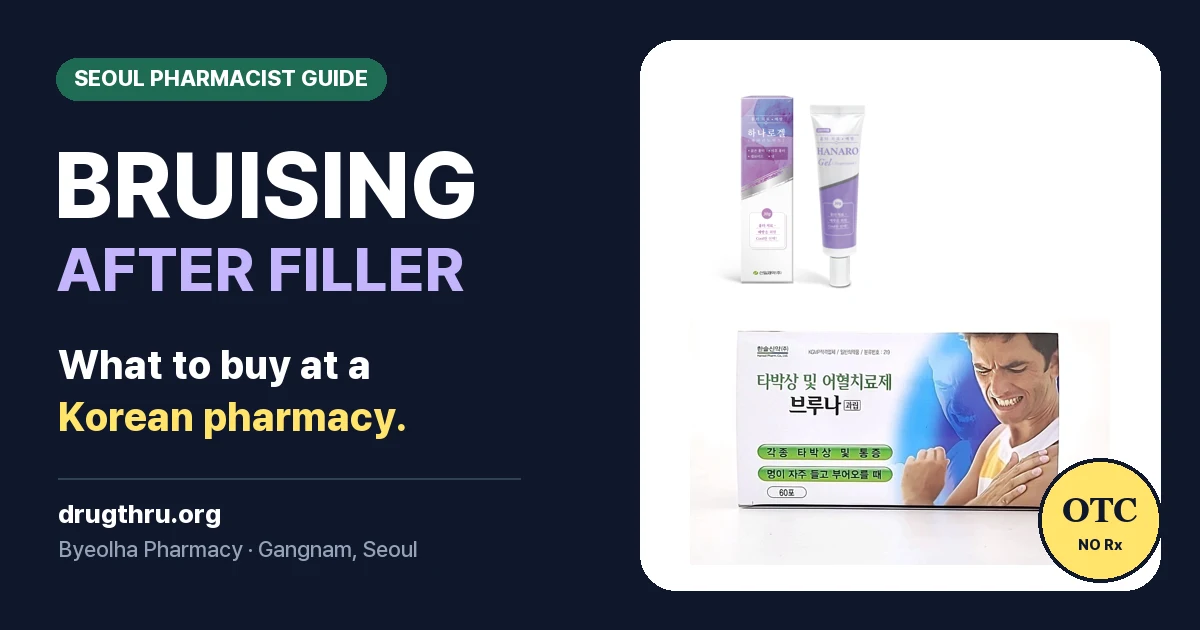
Ask for a heparinoid gel (헤파리노이드 겔). We stock two at Byeolha Pharmacy, and both carry the same approved uses.

| Noblue Gel | Hanaro Gel | |
|---|---|---|
| Maker | JW Pharmaceutical | Shinil Pharm |
| Active | Heparinoid 3 mg/g | Heparinoid 3 mg/g |
| Approved for | Pain, bruising and haematoma after injury; hardening and pain after injections; raised scars and keloids | |
| How often | Once to several times a day, rubbed in gently | |
| Size | 20 g | 20 g · 30 g · 50 g |
| Children | Not for children 5 and under | |
Both are over-the-counter medicines, so you don’t need a prescription.
4. How to use a bruise gel after filler
- Wait until the needle marks have closed. The labels say not to use these gels on open or unhealed skin.
- Apply a thin layer over the bruise, once to several times a day.
- Spread it gently — don’t massage hard. Plastic surgeons advise against aggressively rubbing filler areas because it can move the filler.
- Avoid rubbing it into raw or weeping skin, and keep the area out of strong sun.
- On or near the eyes — heparinoid gel labels say not to use them on the eyes. Under-eye skin is very close, so for tear trough filler bruising start with a cold compress and ask your clinic before putting gel there
- On the lips themselves or inside the mouth (mucous membranes). The skin around the mouth is fine
- On broken, oozing or infected skin
- If you have a bleeding disorder (haemophilia, low platelets, purpura) or a condition where even minor bleeding is dangerous
- Pregnant or breastfeeding? Ask a pharmacist before using any bruise product
5. Bruna Granules: Korea’s oral medicine for bruising
This is the one visitors don’t expect. Bruna Granules are an over-the-counter herbal medicine based on Danggwisu-san (당귀수산), a traditional formula built around angelica root. In Korea it is approved for swelling and pain from bruises, and it’s one of the most popular things we hand over after procedures — many customers take it together with a bruise gel and tell us it helps.

- Adults: 1 sachet, 3 times a day
- When: before meals or between meals
- How long: short-term only. If there’s no improvement after a few days, stop and ask a pharmacist
- Price at Byeolha Pharmacy: 15 sachets for ₩15,000 — five days’ supply at 3 a day
- You are or may be pregnant — it contains safflower and peach kernel, which carry a risk of miscarriage or early labour
- You have a hereditary sugar intolerance (galactose intolerance, Lapp lactase deficiency, glucose-galactose malabsorption) — it contains lactose
- Ask a pharmacist first if you have high blood pressure, heart or kidney disease, swelling (oedema), you’re older, or you take other medicines — especially diuretics or other licorice-containing products
- Stop and get advice if your face or hands swell, your blood pressure rises, you feel weak or get muscle cramps (it contains licorice), or you get a rash or stomach upset
6. Painkillers and supplements that make bruising worse
Some common medicines thin the blood a little and can make a bruise bigger. The American Society of Plastic Surgeons advises avoiding aspirin and NSAIDs for 5–7 days before and 24–48 hours after filler.
- Avoid for now: aspirin, ibuprofen (Advil, Motrin), naproxen (Aleve) and other NSAIDs, plus alcohol
- Supplements that can increase bruising: vitamin E, fish oil and some herbal products such as ginkgo
- If you need a painkiller: acetaminophen (paracetamol). In Korea it’s sold as Tylenol over the counter
- Prescribed aspirin or blood thinners? Don’t stop them on your own — ask the doctor who prescribed them
7. Arnica after filler: worth it?
Arnica is the first thing many people reach for, and it’s all over social media. But a 2025 review of the research concluded that the evidence for arnica reducing bruising and swelling after cosmetic injections is inconclusive.
It’s also not available as a medicine here: no arnica-containing medicine is approved in Korea, so you won’t find arnica gel or tablets on a Korean pharmacy shelf. Visitors ask us for it all the time. If arnica works for you, bring it from home. Otherwise, a heparinoid gel is the realistic pharmacy option in Seoul.
8. The first 48 hours: ice, heat, sleep

- Ice is your friend in the first 24 hours. Wrap a cold pack in a thin cloth and hold it on for short periods — never ice directly on skin
- Skip saunas, hot baths and hard exercise for 24–48 hours; heat and exertion can increase swelling and bruising
- Sleep on your back if you can, so you don’t press on the treated area
- Don’t poke or massage the area unless your clinic told you to
9. Bruising after filler FAQ
About the author
Lee Jeong-hoon is a licensed pharmacist (15 years, Korean license no. 61641). He worked in pharmaceutical R&D and regulatory affairs at a multinational drug company before opening Byeolha Pharmacy in Gangnam, which he has run for seven years.
He writes these guides by reading the official Korean drug labels himself, so visitors get the same information a Korean pharmacist works from.
- Ministry of Food and Drug Safety (MFDS), Korea — Noblue Gel (item 201703181), Hanaro Gel (201601514) and Bruna Granules (200103524) approvals and labels (checked Oct 2026)
- American Academy of Dermatology — Fillers: FAQs
- American Society of Plastic Surgeons — What not to do after getting facial filler
- US Food and Drug Administration — Dermal Fillers (Soft Tissue Fillers): risks and patient information
- Minimizing bruising following fillers and other cosmetic injectables. J Clin Aesthet Dermatol, 2013
- A review of social media claims and scientific evidence for Arnica montana in post-injectable procedures, 2025
© 2026 DrugThru